
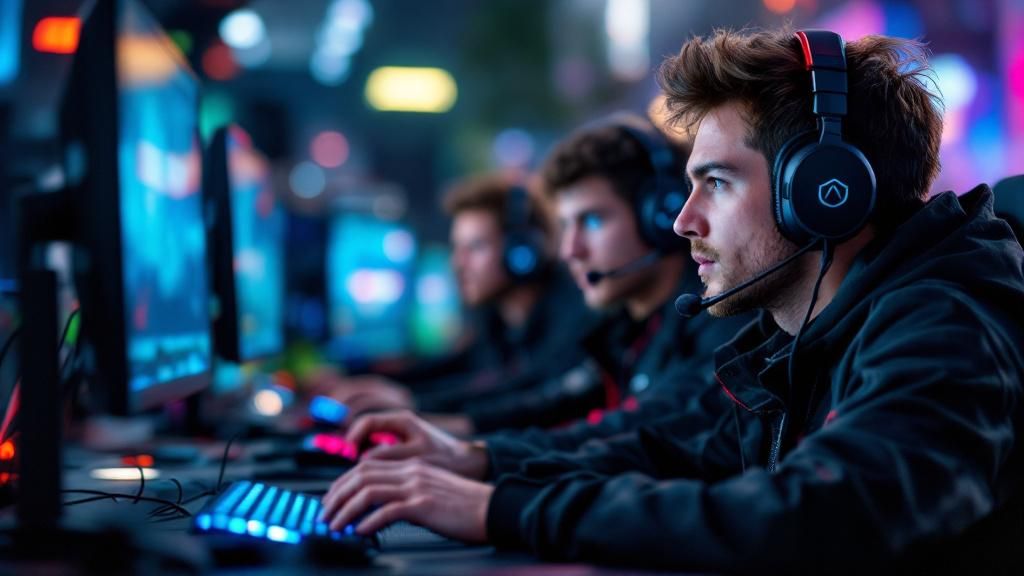
The professional esports landscape has undergone a significant transformation, with top-tier teams now investing considerable funding into advanced gaming peripherals and equipment. From high-refresh-rate monitors to precision-engineered mice and precision keyboards, these technological investments have become essential for tournament performance. This article examines how top-tier gaming teams defend expenditure on premium hardware, investigates the specific equipment driving performance advantages, and investigates whether high-quality equipment actually converts into competitive wins or merely reflects the sector’s growing professionalism.
The Evolution of Professional Esports Equipment
The progression of esports hardware innovation has been deeply intertwined with the rise of competitive gaming. What originated from basic equipment used by enthusiasts has developed into advanced, specially designed gear crafted to microsecond accuracy. Industry leaders now allocate significant development funding to examining the movement science behind tournament play, yielding gear optimised for competitive settings. This technical advancement demonstrates beyond modest upgrades, but a major transformation in industry perspectives on the link between gear specifications and tournament success.
Contemporary professional esports teams consider hardware investment as critical foundation rather than discretionary expenditure. The competitive landscape demands equipment capable of delivering consistent, predictable performance under intense pressure, with players requiring tools that reduce delay and improve responsiveness. As tournaments become more fiercely contested and prize pools grow substantially, organisations recognise that small advances in equipment quality may result in considerable edge. This recognition has sparked a positive feedback loop wherein manufacturers keep advancing technology, teams refresh their gear, and performance benchmarks escalate accordingly.
Essential Equipment for Professional Players
Professional esports teams acknowledge that superior peripherals form the foundation of elite performance. Each piece of equipment, meticulously selected and customised, substantially affects player performance and consistency. Elite organisations invest thousands of pounds annually in hardware, appreciating that marginal gains in speed, comfort, and accuracy translate into significant competitive advantages. Players dedicate extensive time training with their equipment, making familiarity and quality paramount. This investment indicates market evolution and the well-documented relationship between hardware quality and competitive outcomes.
Mouse and Keyboard Equipment
Gaming mice represent key expenditures for competitive gamers, with teams commonly buying several mice per competitor. High-end models include adjustable sensitivity controls, assignable controls, and rapid-response technology with sub-millisecond accuracy. Professional-grade mice leverage cutting-edge sensor systems to eliminate lag and ensure consistent cursor movement across multiple competitive environments. Teams perform thorough evaluations to select devices aligned with competitor requirements. Brands like Logitech, Razer, and SteelSeries command the esports market, with elite competitors often receiving sponsorship deals and dedicated product support.
Mechanical keyboards have become increasingly essential components, providing exceptional tactile feedback and longevity versus standard alternatives. Competitive gamers prefer switches offering ideal actuation force and response times, typically spanning 45 to 60 grams. Programmable RGB lighting aids team coordination during team play, whilst customisable commands streamline intricate gameplay commands. High-end models withstand sustained, demanding usage across tournament seasons. Teams acquire multiple keyboard configurations, allowing players to adapt to varied gameplay requirements and personal preferences seamlessly.
Monitors and Display Technology
High-refresh-rate monitors substantially enhance gaming performance, with pro esports teams predominantly using 144Hz, 240Hz, or 360Hz displays. Higher refresh rates deliver smoother visual rendering, reducing motion blur and facilitating better cursor tracking during rapid gameplay. Competitive teams prioritise monitors with minimal response delay and rapid response times, generally below one millisecond. Accurate colours and consistent brightness remain important factors, especially for titles requiring exact visual differentiation. Investment in high-end display technology is one of the most significant peripheral expenditures, often exceeding £500 per unit.
Display resolution and screen technology considerably affect professional gear selection choices. Most competitive players favour 1080p resolutions on fast-refresh monitors, emphasising frame rates over graphical fidelity. IPS and TN panel technologies each offer distinct advantages; TN panels deliver quicker response times whilst IPS panels provide better colour accuracy. Teams undertake side-by-side testing to establish ideal settings for specific game titles and player-specific needs. Curved and ultrawide displays remain less prevalent in esports contexts, as competitive advantage derives mainly from response time and refresh rate performance.
Investment Strategies and Fund Distribution
Effective Financial Planning
Professional esports organisations manage hardware investment with careful strategic consideration, distributing considerable shares of their operational budgets towards equipment procurement. Teams conduct thorough cost-benefit assessments to establish ideal expenditure across displays, controllers, and gaming peripherals. This systematic approach ensures resources are deployed optimally, improving performance edge whilst preserving fiscal stability. Leading organisations typically dedicate between 5-15% of annual budgets to technology investment, recognising that hardware excellence closely connects with skill enhancement and competitive outcomes.
Sponsorship and Equipment Partnerships
Several elite esports teams leverage partnership deals with peripheral manufacturers to reduce equipment costs significantly. These collaborations supply teams with no-cost or discounted hardware, allowing spending in multiple backup devices and experimental setups without significant expense. Manufacturers enjoy brand recognition and standing linked to professional teams, creating mutually advantageous relationships. Such working relationships have become increasingly sophisticated, with sponsors providing bespoke equipment customised specifically for specific athlete demands and preferences, enhancing both performance and promotional benefit.
Extended Investment Returns
Professional teams evaluate equipment expenditures through comprehensive performance data and tournament winnings rather than immediate returns. Superior peripherals contribute to player satisfaction, lowering player departures and preserving team consistency, which bolsters competitive consistency. Tournament prize pools and sponsorship income earned through high-performing organisations far outweigh equipment costs, warranting continued investment. Additionally, professional-grade equipment establishes company reputation, drawing in skilled athletes and securing valuable partnerships, creating lasting competitive benefits and long-term profitability for esports organisations.
